
Why AI in Logistics Fails Without a Human Team (and How to Fix It)
Imagine a high-performance sports car. It has the fastest engine, the most aerodynamic design, and cutting-edge navigation technology. Now, imagine putting that car on a race track without a driver. No matter how advanced the engineering is, without a skilled human to navigate unexpected turns or mechanical quirks, that car isn’t winning the race—it’s crashing into the wall.
This is exactly where the industry stands with AI in logistics today.
We are promised a future of autonomous supply chains, predictive shipping, and instant data analysis. And while the technology is powerful, the reality is often messier. Algorithms struggle with dirty data, edge cases, and the nuanced decision-making that logistics professionals handle every day. The secret to unlocking the speed of AI isn’t better software; it’s building the right team to wield it.
Get a Free, No-Obligation Quote

The Evolving Landscape of AI in Logistics
The logistics sector is undergoing a massive transformation. We have moved past simple barcode scanners into an era of Generative AI, predictive analytics, and autonomous mobile robots (AMRs).
However, there is a stark contrast between adoption and success. According to recent insights from McKinsey & Company, successful digital transformations require a fundamental shift in organizational culture and talent, not just technology. A significant percentage of logistics companies are piloting AI to optimize routes and forecast demand, yet nearly 95% of these pilots fail to make it past the proof-of-concept stage.
Why? Because logistics is fundamentally a human-centric industry wrapped in data. Trends for 2026 indicate that while AI can crunch numbers faster than any human, it lacks the context to understand why a shipment was delayed by a local festival or how to negotiate a rate with a frustrated carrier. The trend is shifting from “AI replacing humans” to “AI augmentation,” where success depends on the synergy between computational power and human oversight.
The Shift from Old to New: Why Pure Tech Often Fails
In the “old” model of logistics modernization, companies threw money at expensive software suites hoping they would magically fix operational inefficiencies. They expected the tool to do the work.
- The Old Way: Buy a $100k AI in logistics platform, feed it messy historical data from three different legacy systems, and expect perfect predictive maintenance. Result? “Garbage in, garbage out.”
- The New Way: Acknowledging that AI in logistics requires clean, structured data and constant supervision. The new strategic advantage lies in the Human-in-the-Loop (HITL) model.
Modern logistics leaders realize that before an AI can predict a stockout, a human must ensure the inventory data is accurate. Before an algorithm can automate invoice auditing, a human must handle the exceptions that don’t fit the standard format. The shift is not away from technology, but toward a support structure that makes the technology viable.
The Synergy of Intelligence: Context vs. Computation
To understand why the “people” part of AI in logistics is so critical, we have to look at what AI is good at versus what humans are good at.
AI is a master of Computation. It can analyze millions of shipping routes in a second to find the cheapest option. It can spot patterns in fuel consumption that a human eye would miss.
Humans are masters of Context. A human logistics coordinator knows that “cheapest” isn’t always “best” if the carrier has a history of damaging fragile goods. A human knows that a storm in the Pacific requires a phone call to the client, not just an automated email update.
When you combine these two, you get Synergy.
- Without AI: Your team is drowning in data entry and manual spreadsheets.
- Without People: Your AI is making decisions based on bad data, leading to “silent failures” where revenue leaks unnoticed.
- With Both: Your AI flags the anomaly, and your human expert investigates and solves it. This is the “Golden Mean” of modern logistics.
Key Benefits and Strategic Advantages of a Hybrid Model
When you combine powerful AI in logistics tools with a dedicated human support team, the results are transformative. Here is how the “People + AI” model drives specific outcomes:
1. Data Integrity and Hygiene
AI in logistics is only as smart as the data it is fed. If your legacy systems are full of duplicate entries, missing fields, or non-standardized carrier codes, your expensive AI tool will fail.
- The Human Role: A dedicated team works upstream to “clean” the data before it hits the AI. They normalize invoice formats, verify carrier details, and tag data sets. This ensures your predictive analytics are actually predicting reality.
2. Exception Management
In logistics, the “Happy Path” (where everything goes right) only happens about 80% of the time. The other 20%—weather delays, strikes, damaged goods—are “exceptions.” AI is terrible at exceptions.
- The Human Role: Your AI software detects a delay and flags it. Instead of the system stalling or sending a generic error, it routes the issue to a human specialist. This person uses empathy and judgment to call the carrier, find an alternative solution, and update the client.
3. Continuous “Training” of the Model
AI models drift over time. They need to be “retrained” to stay accurate.
- The Human Role: When the AI makes a recommendation (e.g., “Route via Port B”), and a human rejects it because they know Port B is on strike, that data point teaches the AI. A skilled team doesn’t just use the software; they improve it simply by doing their jobs correctly.
4. Speed to Market
Building a perfect, fully automated system can take years.
- The Human Role: You don’t have to wait. By using a “human bridge”—a team that manually handles the gaps in your automation—you can deploy AI in logistics tools today. As the software improves, the human team shifts to higher-value tasks, but you get the ROI immediately.
Overcoming Common Objections
“But isn’t AI supposed to eliminate the need for more staff?”
Ideally, yes—eventually. But we aren’t there yet. Currently, AI in logistics creates new types of work: data labeling, exception handling, and oversight. Without a team to do this, your expensive AI tool sits unused. The goal is not to bloat your headcount, but to optimize it by using cost-effective talent to manage the AI, freeing your core US/local team for strategy and client relationships.
“It’s too expensive to hire a team just to manage software.”
This is a validity myth. It is expensive to hire locally for these roles (e.g., paying $60k/year for data cleaning). However, the cost of failing to implement your AI investment is far higher. The solution lies in how you source that talent—looking to global talent pools where you can get high-quality, degree-holding professionals at a fraction of the cost.
How Valoroo Helps Scale AI in Logistics with Human Talent
This is where the “hard to implement” problem meets its solution. Many logistics companies simply don’t have the internal bandwidth to clean data, train models, or manage the exceptions that AI flags. They try to make their high-paid logistics managers do data entry, which leads to burnout and turnover.
Valoroo bridges the gap between your ambition for automation and the reality of your workload. We provide the “People” component of the “AI + People” equation.
The Valoroo Solution
We don’t just find you staff; we build you a dedicated extension of your team that operates with Extreme Ownership to ensure your technology investment pays off.
- Data Hygiene & Management: Our teams handle the rigorous data entry and cleansing required to fuel your predictive analytics and AI tools.
- Exception Handling: When your AI flags a shipment discrepancy or an invoice error, a Valoroo specialist investigates and resolves it, ensuring your operations never stall.
- 24/7 Monitoring: Logistics doesn’t sleep. Our global talent pools (including the Philippines and nearshore locations) ensure your AI systems are monitored and managed around the clock.
- Cost Efficiency: We provide highly skilled talent at a fraction of the cost of local hiring, making the “Human-in-the-Loop” model financially scalable for businesses of all sizes.
Frequently Asked Questions (FAQ)
1. Why do I need human staff if I'm investing in AI for logistics?
AI is not autonomous yet; it requires “supervision.” Humans are needed to clean the data the AI learns from, manage exceptions the AI cannot solve (like a complex client negotiation), and make the final judgment calls on high-stakes issues.
2. What are the biggest risks of using AI in logistics without a support team?
The biggest risk is “silent failure.” Your AI might generate bad routes or incorrect demand forecasts based on bad data. Without a human team auditing the outputs, you might not realize the error until you’ve lost revenue or a client.
3. Can AI eventually replace the need for logistics coordinators entirely?
It is unlikely in the near future. The role will shift from manual data entry to “exception management” and strategy. The most successful companies will be those that use AI in logistics to make their humans 10x more productive, not those that try to replace humans entirely.
Conclusion
The promise of AI in logistics is speed, efficiency, and predictive power. But technology alone is not a silver bullet. The companies that win in the next decade will not be the ones with the best software, but the ones with the best teams supporting that software.
You cannot automate your way out of a bad process or messy data without human intelligence to guide it. The “right people” act as the force multipliers for your technology, ensuring that your AI is accurate, your exceptions are handled with empathy, and your supply chain keeps moving.
Don’t let a lack of bandwidth stop you from modernizing your supply chain. If you are ready to implement AI but need the team to make it work, we are ready to help. Would you like me to connect you with a Valoroo growth specialist to discuss building your dedicated support team?
Related Posts

Valoroo Cares Iloilo
Valoroo Cares Iloilo: How Our Philippine Team Gave a Local School a Fresh StartValoroo Cares Iloilo is what it looks like when a company backs its own people's ideas: on September 6, 2026, Valoroo funded a full classroom makeover, computers, an air conditioning unit,...
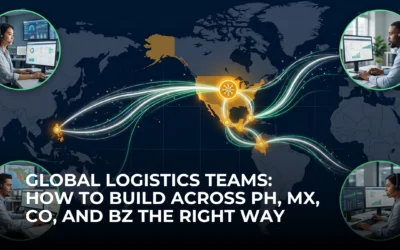
Global Logistics Teams: PH, MX, CO, and BZ Compared
Logistics Outsourcing vs In-House: Real Differences That Affect Your MarginBuilding global logistics teams is no longer a fringe strategy reserved for enterprise operators with dedicated HR infrastructure and six-figure implementation budgets. Mid-market freight...
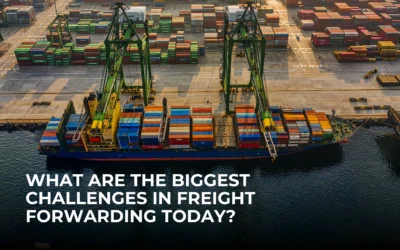
Logistics Outsourcing 2026: Why It’s No Longer Optional
Logistics Outsourcing vs In-House: Real Differences That Affect Your MarginLogistics outsourcing 2026 has crossed a line that most operators haven't fully acknowledged yet. It's no longer a cost-cutting move made by companies trying to trim overhead. It's the...
Learn what makes our dedicated team model different and why it succeeds.
Locations
Address: 10350 N McCarran Blvd #1112. Reno, NV 89503
Phone: (858) 251-1210
Email: info@valoroo.com